
Physiotherapy for a dog with reduced vision is built like any other rehabilitation plan: an assessment first, then measurable goals, then a small number of exercises performed regularly and reviewed over time. Massage and tactile work are documented mainly for comfort, circulation and relaxation rather than for restoring sight, and a home routine should prioritise predictability, gentle contact and the dog's own consent to being handled.
How is a physiotherapy plan built for a dog?
A veterinary physiotherapy plan normally begins with a clinical assessment. The practitioner records the dog's history, observes posture and gait, palpates muscle tone and joint range, and notes any area of pain or stiffness. Where vision is reduced, the assessment also covers how the dog moves through space: whether it hugs walls, hesitates at thresholds, or startles when approached from a particular side.
From that assessment come goals. These are usually functional and specific, for example maintaining range of motion in a stiff shoulder, rebuilding muscle after surgery, or improving balance on uneven ground. Each goal is paired with a small set of exercises, a frequency, and a date for review. Progress is judged against the baseline recorded at the first visit, not against another dog.
For a dog with impaired vision, the plan usually adds environmental conditions to the exercise prescription: the same surface, the same room, the same order of movements, and a warning signal such as a hand resting briefly on the shoulder before any handling begins. German-language owner resources describe comparable principles across massage, acupressure, Tellington TTouch, ground work and equipment such as underwater treadmills, electrical stimulation and ultrasound, and set out both the intended uses and the limits of each method, as can be seen in the animal physiotherapy methods covered for dog owners. Equipment-based techniques are practitioner-led; they are not home treatments.
What is documented about massage and tactile work?
The evidence base for massage in dogs is modest but real. Studies and veterinary reviews describe effects on heart rate, respiratory rate and behavioural signs of stress during and shortly after gentle massage. These are comfort and welfare outcomes. There is no documented mechanism by which massage restores retinal function or reverses a congenital eye condition, and any claim of that kind should be treated with caution.
What is better supported is the role of tactile work in handling tolerance. Systematic, slow contact teaches a dog that touch predicts something neutral or pleasant. Over repetitions, this can reduce the defensive reaction that many visually impaired dogs develop when approached without warning.
Tellington TTouch and acupressure are frequently described in owner-facing literature. TTouch uses specific circular movements of the skin and gentle body wraps, and is presented as a way to influence posture, tension and arousal. Acupressure applies finger pressure to defined points. Both are low-risk when performed gently on a healthy dog, and both are described in the German dog therapy literature alongside their stated limits. Neither replaces a veterinary diagnosis, and neither should be used on an area of suspected injury, on a dog with a skin infection, or on a dog that shows pain on contact.
A practical distinction helps owners: massage and tactile work are best understood as comfort measures and handling training, not as treatment for the eye condition itself.
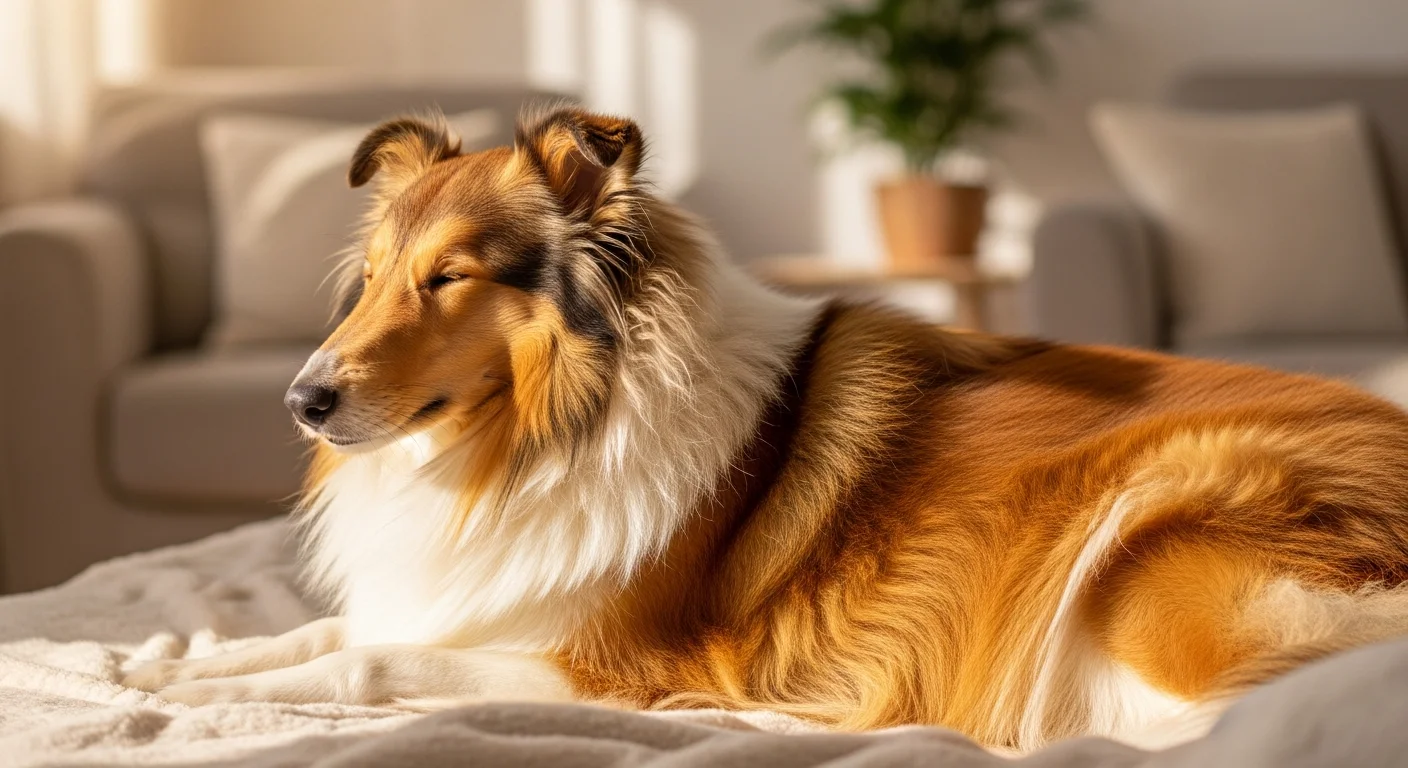
How is handling built up so a dog stays relaxed?
Handling is a skill that can be taught in small steps. The sequence below reflects common practice in veterinary behaviour and rehabilitation work.
- Start where the dog is already calm, at home, with no other animals or visitors present.
- Announce your approach with a consistent cue: a soft spoken word, or a hand placed briefly on a familiar surface near the dog.
- Touch one body area for a few seconds only, then stop and withdraw. Stop before the dog wants you to stop.
- Watch for consent signals: a soft body, a turned head towards your hand, a dog that leans in or stays still. A stiffened body, lip licking, yawning, turning away or moving off are requests to pause.
- Build duration and the number of body areas gradually, over days rather than in one session.
- Pair each step with something the dog values, such as a quiet word or a food reward, so that handling predicts a good outcome.
- Keep sessions short. Two or three minutes, repeated daily, is usually more useful than one long session.
For a dog losing sight, the handler's position matters. Approaching from the front, at the dog's level, and letting the dog initiate contact reduces startle. Some owners find that a light pressure through a towel or a body wrap is tolerated before direct hand contact is.
If a dog shows pain, sudden aggression or persistent avoidance during handling, that is a veterinary matter rather than a training problem, and the dog should be examined before the routine continues.
What does a home routine look like for a dog losing its sight?
A workable home routine is short, predictable and easy to repeat. A typical day might include:
- A gentle body check of two or three minutes, moving over the shoulders, back and hindquarters in the same order each time, feeling for heat, swelling or new sensitivity.
- A short massage sequence of slow strokes along the direction of the coat, with light circular work over the larger muscle groups.
- One or two balance or ground-work exercises prescribed by the practitioner, performed on a non-slip surface in a familiar room.
- A brief handling practice for a body part the dog finds difficult, such as a paw or an ear, kept to a few seconds and always followed by something pleasant.
- A rest period afterwards, in a place the dog already knows.
Keep the environment stable. Furniture in the same position, the same walking route, and the same verbal cues reduce the cognitive load on a dog that is compensating for lost vision. Where a dog is blind or severely vision-impaired, the home care guidance for daily living is a useful companion to any physiotherapy plan.
Record what you do and what you observe. A simple note of date, exercise, duration and the dog's response gives the practitioner something concrete to work with at the next review, and it helps distinguish a real change from a good or bad day.
What owners should be cautious about
Several claims circulate around massage and tactile work that are not supported by the veterinary literature. Massage does not restore sight, cure a congenital eye condition, or replace ophthalmological monitoring. Devices marketed for home use, including electrical stimulation units and therapeutic ultrasound, require training and a diagnosis before use; incorrect application can cause harm.
Equally, a dog that is losing vision may be more easily startled, and a startle response can look like aggression. This is a welfare issue, not a temperament flaw, and it is managed by changing how people approach the dog, not by correcting the dog.
Physiotherapy, massage and tactile work have a reasonable place in the care of a dog with reduced vision. They are most useful when they are prescribed, measured and reviewed, and when the owner treats them as comfort and handling support rather than as a cure.